
Marijuana DUI

Most people are familiar with the rules and process involved when you are stopped for drug testalcohol DUI. Though the testing methods are in no way perfect, they are much more definitive than the typical methods used to determine marijuana DUI. Breath and blood testing measures blood alcohol concentration (BAC), which has been scientifically proven over time to consistently demonstrate intoxication. On the other hand, testing for impairment when a driver has been using marijuana or other drugs can be much more challenging. In some cases, THC can remain in a person’s blood for a significant time following usage. So what tests and methods do law enforcement use? If police determine a person has exceeded this limit or is “too stoned” to drive, they can be arrested and charged with DUI. The limit in Colorado has currently been set at 5 nanograms per milliliter of blood. Delta 9-Tetrahydrocannabinol (THC) is the active compound that causes impairment. It is important to understand that this is a very minute amount, as one nanogram is equivalent to just one billionth of a gram. Four Main Tests Used in Marijuana Cases Law enforcement has found different tests designed to help them determine whether a driver is under the influence of marijuana. The four ways to detect THC in a person’s body include:

Blood test – As the most common test used, THC levels can be detected in the blood, providing accurate estimates.

Saliva swab – A swab of saliva is taken and tested, allowing police to determine THC levels and how recently marijuana was used.

Urine test – A sample of urine is taken and tested to determine if byproducts of THC broken down by the body are present.

Hair test – Similar to the urine test, only the byproduct of THC can be detected through this test. Unlike alcohol, THC stays in the body much longer. This means that THC levels could be high, but the driver may not be feeling the effects or “impairment” of the drug anymore. In some cases, it may take as long as 72 hours for THC to leave the system. A blood test may show high THC levels when an individual hasn’t actually smoked or ingested marijuana in a day or longer.

If you have been arrested for marijuana DUI, do not hesitate to get counsel. Alexander Truluck focuses his practice as a criminal defense attorney in Clearwater, Palm Harbor, Largo, Dunedin and the Tampa Bay area.

For more information, visit our website at http://www.criminallawyerclearwaterflorida.com
or call (727) 799-3550.


New Years Eve Sobriety Checkpoints in Florida

There is actually a website that lists Sobriety checkpoints for people. They charge $29.99 a year to give you text and email warnings.It’s DUI Block dot com. See the examples below:

County City Location Time
Bradford Starke Undisclosed Location – Bradford County Fri Jan 8, 2016
Clay Keystone Heights Fl-100 Fri Jan 8, 2016
Collier Naples Immokalee Rd and Oaks Blvd Sat Jan 2, 2016
Okaloosa Fort Walton Beach Us-98 @ Brooks Bridge Thu Dec 31, 2016
Broward Pompano Beach Us-441 and Southgate Blvd Thur Dec 31, 2016
Broward Fort Lauderdale W Oakland Park Blvd and N Pine Island Rd Thur Dec 31, 2016
Pinellas Saint Petersburg Park Blvd Thu Dec 31, 2016
Duval Jacksonville Old Middleburg Rd Thu Dec 31, 2016
Sarasota Sarasota Dui Wolf Packs – Sarasota Manatee Countys Thu Dec 31, 2016
Pinellas Clearwater Us 19 And Curlew Rd Thu Dec 31, 2016
Sarasota Sarasota Undisclosed Location – Sarasota / Manatee Sat Dec 26, 2015
Escambia Pensacola Us-29 and Muscogee Rd – Cantonment Thu Dec 24, 2015
Pinellas Clearwater Dui Wolf Packs – Pinellas County Sat Dec 19, 2015
Miami-Dade North Miami Beach N Miami Beach Blvd and Ne 10th Ave Fri Dec 18, 2015
Lee Fort Myers Undisclosed Location – Lee County Fri Dec 18, 2015
Lake Clermont Us-27 and Hooks St Fri Dec 11, 2015
Duval Jacksonville Undisclosed Location – City Limits Fri Dec 11, 2015
Miami-Dade Miami Sw 3 Av and Sw 7 St 8pm To 12am – Thu Dec 10, 2015
Broward Pembroke Pines Pines Blvd and Nw 76th Ave 10pm To 3am – Fri Dec 4, 2015
Sarasota Sarasota Wolfpack Detail 9pm To 4am – Sat Nov 28, 2015

We would really rather that you take a cab or drink responsibly than subscribe to this website.

However, if you or someone you know is arrested for DUI, have them call Alexander Truluck. Alexander Truluck focuses his practice as a criminal defense attorney in Clearwater, Palm Harbor, Largo, Dunedin and the Tampa Bay area.

For more information, visit our website at http://www.criminallawyerclearwaterflorida.com
or call (727) 799-3550.

 

Presidential Candidates and Marijuana

refer “the weed blog” July 7, 2015.

Marijuana is already legal in Alaska, Colorado, the District of Columbia, Oregon, and reefersWashington. With legalization initiatives looming this year and next in states as diverse as Michigan, Ohio, Maine, Massachusetts, California, Nevada, and Arizona, marijuana policy is most definitely on the agenda in the 2016 presidential election campaign.

Candidates and presumed candidates from both parties have staked out a wide array of positions on the issue (although none have taken the bold step of actually advocating for legalization). Now, thanks to the Marijuana Policy Project, we have a scorecard to keep them all straight.

The pro-legalization advocacy group has released its Voters Guide to the 2016 PresidentialRace, detailing the candidates’ positions on marijuana policy and assigning them grades based on where they stand. The candidates were graded on actions they have taken and statements they have made indicating their support for ending pot prohibition, allowing legal access to medical marijuana and defending states’ rights to set their own marijuana policies.

“Most Americans recognize that marijuana is less harmful than alcohol and they think it should be made legal for adults,” said MPP spokesperson Mason Tvert. “Voters should know which candidates support rolling back prohibition and which ones are fighting to maintain it. People are becoming increasingly wary of the federal government’s role in our nation’s marijuana policies.”

Marco Rubio, Grade: D

The young Florida senator staunchly opposes marijuana legalization, but has expressed some support for medicinal use of non-psychoactive forms of medical marijuana (CBD cannabis oil). He has wobbled on the states’ rights issue.

Rubio on marijuana policy:

“If there are medicinal uses of marijuana that don’t have the elements that are mind-altering or create the high but do alleviate whatever condition it may be they are trying to alleviate, that is something I would be open to.” —Tampa Bay Times, July 30, 2014

“Marijuana is illegal under federal law. That should be enforced.” —ABC News, May 15, 2014

Donald Trump, Grade: C

The businessman and television personality supported legalizing all drugs in 1990, but has since changed his tune. He opposes marijuana legalization, but supports access to medical marijuana and has suggested support for letting states decide their own pot policies.

Trump on marijuana and drug policy:

“I’d say [regulating marijuana] is bad. Medical marijuana is another thing, but I think it’s bad and I feel strongly about that. [In response to states’ rights argument] If they vote for it, they vote for it. But, you know, they’ve got a lot of problems going on in Colorado right now. Big problems. But I think, medical marijuana, 100%.” —C-SPAN, Feb. 27, 2015

Hillary Clinton, Grade: B-

The Democratic favorite says she is open to more research on medical marijuana and that she supports Colorado and Washington’s rights to set their own marijuana policies. She says she is interested in seeing the results of their experiment before taking a position for or against legalization.

Clinton on marijuana policy: ”I don’t think we’ve done enough research yet although I think for people who are in extreme medical conditions and have anecdotal evidence that it works, there should be availability under appropriate circumstances.”

However, marijuana is illegal in Florida. If you get caught with some, call Alex Truluck.

Alexander Truluck focuses his practice as a criminal defense attorney in Clearwater, Palm Harbor, Largo, Dunedin and the Tampa Bay area.

For more information, visit our website at http://www.criminallawyerclearwaterflorida.com
or call (727) 799-3550.

 

Don’t Try to Run from Police

Don’t try to run from police when you are Drunk or Don’t Have a License. You only make DUIthings worse.

You hear a lot of horror stories when it comes to clients being arrested for evading law enforcement. Why didn’t you stop? I was scared because my license was suspended or I was scared because I had been drinking are the most common answers that I hear.

It’s as simple as this: None of these answers justify evading police. Evading law enforcement as a felony carries a mandatory minimum 180 days in county jail and up to three years in prison. This is assuming nobody gets injured or killed in the pursuit. By contrast, even a third offense DUI only carries a mandatory minimum of 120 days. Driving on a suspended license with no priors does not require mandatory jail and with priors is usually 30 days or less.

So, even if you think you may be over the legal limit for alcohol consumption and even if your privilege to drive is suspended, if you see those flashing lights behind you or you hear that siren and see the cops, pull to the right and stop as soon as possible. You will be much better off in the long run than if you try to evade the police.

If you or someone you know has been arrested for evading police, DUI, driving on a suspended license or any other criminal charge call a lawyer with the ability and experience to get the job done right.

Alexander Truluck focuses his practice as a criminal defense attorney in Clearwater, Palm Harbor, Largo, Dunedin and the Tampa Bay area.

For more information, visit our website at http://www.criminallawyerclearwaterflorida.com
or call (727) 799-3550.

Deferred Judgement

Deferred Entry of Judgment at Arraignment – is it a good idea?

Suppose you get arrested for possession of narcotics or being under the influence of narcotics. You are scared and you hire a lawyer. The lawyer makes promises to you (that he usually can’t keep) like, “Don’t worry, I’ll get your case dismissed” or “I will take care of everything.” You walk into arraignment court with the lawyer and suddenly he tells you to plead guilty and take deferred entry of judgment. The lawyer tells you that the offer won’t get any better and the cased will be dismissed in under two years.

Some of this is true and some is not. Deferred entry of judgment is a program where in the case of charges of simple possession or being under the influence, if the defendant is found suitable and is otherwise eligible for the program, he would plead guilty to the charges, and sentencing would be deferred for 18 to 24 months. During the deferment period the defendant must obey all laws, perform an approved drug education class, pay certain fees and can earn his dismissal.

So what’s so bad about this?

First, this is still a conviction for many purposes. The federal government and immigration service don’t view deferred entry of judgment as a true dismissal, rather they view it as a conviction. Technically, even under state law, when we plead guilty and are found guilty based on our plea, this is a conviction, albeit a temporary conviction.

Next, if we are eligible for DEJ, then we are eligible even after the conviction at trial. It’s true that after trial, DEJ is discretionary with the judge, bad, we can still get it. Further, when we take into account that we are talking about misdemeanor crimes, it might be worth the gamble to push the case as far as possible before settling if necessary.

Is there a search issue? Let’s run a motion to suppress evidence. Is there a lying or heavy handed cop? Let’s generally try to do everything we possibly can to try and get the case dismissed or reduced. Let’s generally make it as difficult as possible for the prosecutor to secure a conviction. Maybe we can avoid a drug conviction. Maybe I can achieve my client’s goals without pleading guilty straight up to the charged crimes. Let’s try.

Then, if after exhausting all other options we are still not able to get the case dismissed or reduced, only then do we talk about pleading guilty and taking deferred entry of judgment. This is not to say that deferred entry of judgment is a bad thing for the defendant in a criminal case.

Alexander Truluck focuses his practice as a criminal defense attorney in Clearwater, Palm Harbor, Largo, Dunedin and the Tampa Bay area. For more information, visit our website at http://www.criminallawyerclearwaterflorida.com
or call (727) 799-3550.
Can They Force You to Take a DUI Blood Test?

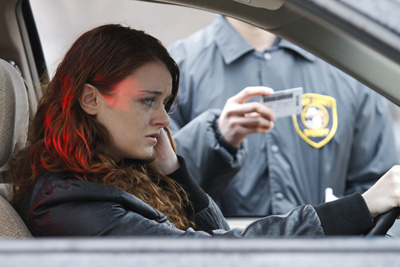
If you are pulled over for suspicion of DUI, you should not refuse to be tested . The consequences of refusing to take the test are usually worse that the consequences for taking the test and failing it.

In the spring of 2013, the United States Supreme Court just heard a DUI case from Missouri. It was called Missouri vs. McNeely and it involved a DUI suspect who did not consent to a test for blood alcohol after an arrest. Police forcibly took a blood sample from Mr. McNeely and tried to use the results of the test against the suspect in court.

Since 1966 the liberal state of California has been relying upon the case of Schmerber vs. California to say that the cops could force a blood extraction from a suspected DUI driver without their consent and without a search warrant.

History

The Schmerber case involved a suspected DUI driver who was in a traffic collision and sent to the hospital to be treated for his injuries. The cops went to the hospital to interview Schmerber and smelled alcohol on his breath. The police told the hospital staff to draw blood for evidentiary testing purposes and the hospital staff did what they were told. Mr. Schmerber did not consent to the blood test and the police did not even try to get a search warrant.

Since 1966 police in California have assumed that it was alright to force a blood draw on any DUI suspect and use it against them in court. This logic flies in the face of the additional case law that has been carved out since that time. Specifically, if you face trial on a DUI case and a refusal is proven, the prosecution is entitled a jury instruction that we call “consciousness of guilt”. It basically says that if you believe the defendant refused a test because he knew he was guilty, you can use that against him.

This, coupled with the additional punishment including jail time, increased alcohol education school and license revocation are all part of what happens to someone convicted of drunk driving and refusing a test. Logically, if we have a jury instruction to help prosecutors get the convictions and increased punishments for the refusal to take the blood test, why would it be necessary to let police force blood draws on DUI suspects? That’s what has been happening in California since 1966.

Implied Consent

In many states, we have what is called an implied consent law. Simply put, when we get a driver’s license we agree that if we are arrested for suspected driving under the influence of alcohol me MUST submit to and complete a test for blood alcohol. If we do not, we may lose our driving privilege and the refusal to submit can be used against us in court and cause increased punishment if convicted of DUI.

What Has Changed?

In the McNeely case, Mr. McNeely was pulled over for a traffic stop and arrested for DUI. He refused to submit to any chemical test for blood alcohol. The arresting officer took McNeely to a hospital and requested a blood draw even though the suspect failed to give his consent. The officer made no attempt to obtain a search before the blood draw.

In court McNeely’s attorney moved to suppress the evidence of the blood draw based upon the belief that it was taken through an illegal seizure. The trial court agreed and kept the evidence out of court. Apparently the United States Supreme Court agreed with the Missouri trial judge. They stated that as a general rule any warrantless search is invalid. There are limited circumstances in which searches and seizures may be conducted without a warrant.

Practical Application of the New Law

In certain places where forced blood draws are the norm, I would expect law enforcement would start doing a lot fewer forced blood draws. However, I think we will see police trying harder to justify their actions. For example, DUI cases are often late at night or early in the morning and on weekends. It is a lot harder to get a search warrant signed at 3:00 a.m. on a Saturday than it is at 2:00 p.m. on a Tuesday. Likewise, if a defendant is released from custody, i.e. makes bail or is cited out, law enforcement may actually lose their evidence of blood alcohol if a blood sample is not taken in a hurry.

If you are arrested for DUI, always refuse to take the preliminary alcohol screening or the hand-held field test at the side of the road and exercise your option for a blood test. Doing this often makes the police investigation much more difficult for them. The reason is because when we blow in breathalyzer machine it returns a result of .08 or above it helps police justify their arrests and their reports. If we don’t give them the actual numbers to work with it often gives police a much harder time in writing reports particularly regarding topics like field sobriety test results and objective symptoms of intoxication. This often provides inroads to attack the prosecution’s case, win at trial and generally get better settlement results for clients.

Alexander Truluck focuses his practice as a criminal defense attorney in Clearwater, Palm Harbor, Largo, Dunedin and the Tampa Bay area.

For more information, visit our website at http://www.criminallawyerclearwaterflorida.com
or call (727) 799-3550.

DUI Checkpoints Pinellas

According to the Pinellas County Sheriff’s office:DUI

Pinellas Deputies, State And Local Police Agencies To Conduct County Wide DUI Wolf Pack Saturday March 14

DUI Wolf Pack Saturday March 14

Who:
Pinellas County Sheriff’s Office
-Patrol Operations Bureau
– DUI Unit

Tarpon Springs Police Department
Clearwater Police Department
Largo Police Department
St. Petersburg Police Department
Florida Highway Patrol
G4S Prisoner Transportation

What:
In an effort to reduce DUI related injuries, deputies will conduct a Wolf Pack operation in Pinellas County.

Where:
Deputies will monitor traffic throughout Pinellas County.

When:
Saturday March 14, 2015 through early morning Sunday March 15, 2015.

How/Why:
Pinellas County Deputies in conjunction with Tarpon Springs Police Department, Clearwater Police Department, Largo Police Department, St. Petersburg Police Department, Florida Highway Patrol and G4S Prisoner Transportation will conduct a DUI Wolf Pack operation. The operation will begin Saturday night and continue into early Sunday morning.

This operation is part of the Pinellas County Sheriff’s on-going commitment to reduce deaths, injuries, and property damage associated with traffic crashes related to impaired driving.  The goal of the Wolf Pack is to educate people and create public awareness about the dangers of operating a motor vehicle while under the influence of alcohol and any chemical or controlled substances.

The Pinellas County Sheriff’s Office will be conducting Wolf Packs and DUI checkpoints continuously throughout the year.

Don’t drink and drive. However, if you do, and you get caught in a DUI checkpoint, call Alexander Truluck.

Alexander Truluck focuses his practice as a criminal defense attorney in Clearwater, Palm Harbor, Largo, Dunedin and the Tampa Bay area.

For more information, visit our website at http://www.criminallawyerclearwaterflorida.com
or call (727) 799-3550.

Can You Get a Traffic Ticket Dismissed?

refer Lenny Ignelzi/Associated Press

Can an attorney really get your traffic ticket dismissed? If there are errors on the ticket, it court hearinggets dismissed. If there are no mistakes, then it’s not going to be dismissed, but they still might get out of the points and the school and get a reduced fine, like a reward for a good record.”

But do traffic lawyers deliver the goods?

“Can they get the tickets dismissed? Yes, because they know the technicalities,” says Brenda Di Ioia, chief traffic magistrate for Broward County Courts in Fort Lauderdale, Florida.

“They also know which ones they can’t get dismissed,” she adds. “When the ticket is perfect, nobody is going to be able to do anything for you, so they plea (bargain) those. The attorneys are great if you don’t have time to go to court or if your driving record isn’t great.”

So how do they do it? How can they afford to do it?

We’ll ask a couple of them. But first, the realities of traffic court.

You probably aren’t aware of it, but when you receive a moving violation, you enter the complex machinery of your local municipal or county traffic court, where negotiation is more the rule than the exception.

They don’t tell you that, of course. That’s why 9 in 10 traffic offenders simply pay the ticket rather than fight it in court.

Paying that ticket has one serious drawback, however: It counts as a conviction on your record. And in recent years, the ripple costs of a conviction have eclipsed the immediate financial ding to your wallet. Today, the wrong ticket at the wrong time can send your insurance through the roof, result in a suspended license and steep state surcharges, and even cost you your job.

If you wonder if you need a traffic lawyer, you probably do.

Alexander Truluck focuses his practice as a criminal defense attorney in Clearwater, Palm Harbor, Largo, Dunedin and the Tampa Bay area.

For more information, visit our website at http://www.criminallawyerclearwaterflorida.com
or call (727) 799-3550.

Determining Your Blood Alcohol Content

It has been been estimated that a large percentage of people driving a car on Saturday DUInight might be driving with a blood alcohol content over the legal limit. Suppose you have had a few glasses of wine at a restaurant and then drive home. Suppose a police officer pulls you over for a traffic offense and detects an odor of alcohol. The officer might ask you to step out of the car and give you  a field coordination test. If the officer determines that you may be intoxicated, you will be taken to the precinct for further testing. Once at the precinct, the officer determines if your blood alcohol content (“BAC” for short) is over the legal limit. You will then be placed under arrest and is charged with drunk driving. How did the police determine the blood alcohol content of the driver? How can you know the result was accurate?

There are usually two ways to determine the blood alcohol content of a person. The more accurate way is to physically take out the person’s blood and send it to a lab. The more common way, however, is to give them a breath test.

There are ways to try to compute your blood alcohol levels based on a number of factors. Source: Computing a BAC Estimate. Driving under the Influence October 1992. U.S. Department of Transportation

This BAC calculator can only estimate your blood alcohol levels. Metabolism, body fat percentage and medication are other factors that can affect the rate of absorption by the body, and these are not considered in this calculation.

Blood alcohol content (BAC) or blood alcohol level is the concentration of alcohol in the bloodstream. It is usually measured as mass per volume. For example, a BAC of 0.04% means 0.4% (permille) or 0.04 grams of alcohol per 100 grams of individual’s blood. Use the HealthStatus BAC Calculator for informational purposes only, and not to drink and drive or drink and work.

Every state in the U.S. has a legal Blood Alchohol (BAC) limit of 0.08% per se. Most states also have lower legal BAC limits for young and inexperienced drivers, professional drivers and commercial drivers. Sentences for drunk driving include imprisonment, large fines, lengthy drivers license suspension and/or revocation, house arrest, community service, DUI schools, alcohol treatment programs, vehicle forfeiture and ignition interlock restrictions.

Important Note: There is no blood alcohol calculator that is 100% accurate because of the number of factors that come into play regarding the consumption and reduction (burnoff) rates of different people. Factors include the sex (male/female) of the drinker, differing metabolism rates, various health issues and the combination of medications that might be taken, drinking frequency, amount of food in the stomach and small intestine and when it was eaten, elapsed time, and others. The best that can be done is a rough estimation of the BAC level based on known inputs.

If the police department has calculated your BAC using a breath test, the results may be challenged based upon the methods used. However, only an experienced criminal defense attorney should be consulted who is familiar with the equipment and methods used in your area.

Alexander Truluck focuses his practice as a criminal defense attorney in Clearwater, Palm Harbor, Largo, Dunedin and the Tampa Bay area.

For more information, visit our website at http://www.criminallawyerclearwaterflorida.com
or call (727) 799-3550.

Loose Your License for Marijuana

Many people think that possessing a small amount of marijuana is “no big deal” these days. jointWhat do you think about loosing your drivers license for 2 years? Is that a big deal?

The penalties available for a marijuana possession charge will depend on the amount of cannabis at issue. Where a defendant is found in possession of less than 20 grams, the offense is classified as a first degree misdemeanor, with penalties of up to one year in jail or one year probation, and a $1,000 fine.

A conviction for misdemeanor marijuana possession will result in a two-year driver’s license revocation, in addition to a likely term of probation. If a probationary sentence is imposed, the defendant will be subjected to intrusive random drug testing and be responsible for paying costs of supervision, court costs, fines, costs of prosecution, and completing all other terms and conditions imposed by the court. A failure to complete any one of these conditions, or a failed drug test, or a missed drug test, will result in a violation of your probation, the issuance of a warrant for your arrest, and a likely jail sentence.

Other penalties for possession of marijuana in Florida include the following:

  • Mandatory driver’s license revocation (upon conviction);
  • Ineligibility for some government employment;
  • Ineligibility for Bright Futures Scholarships and other forms of State financial aid;
  • Interference with State licensing, permitting, and certifications without completion of an approved drug treatment program;
  • Ineligibility for public housing;
  • Interference with employment prospects and college applications;
  • Damage to reputation.

Defense against Marijuana Possession

Although the facts of every case will differ, cannabis possession is a highly defendable criminal charge.

The first angle of attack in a marijuana possession case is to challenge the legality of the search, detention, or traffic stop that led to the arrest or Notice to Appear. If appropriate in the case, this is done through the filing of a Motion to Suppress Evidence. A Motion to Suppress is a legal challenge to the constitutional validity of a law enforcement officer’s actions. Where police act unlawfully, any evidence they derive as the “fruit” of their illegal actions will be excluded from evidence under the Fourth Amendment “exclusionary rule.”

Thus, if a Motion to Suppress is granted, this may deprive the State of Florida of critical evidence (including the cannabis itself) needed to prove the case. Without the required evidence, the case will be dismissed, dropped, or the defendant acquitted.

To be safer, don’t be in possession of Marijuana. However, if you do get arrested, call Alex Truluck. Alexander Truluck focuses his practice as a criminal defense attorney in Clearwater, Palm Harbor, Largo, Dunedin and the Tampa Bay area.

For more information, visit our website at http://www.criminallawyerclearwaterflorida.com
or call (727) 799-3550.